Buying In Russian Hill: Views, Stairs, And Resale Potential
July 23, 2026
July 23, 2026
If you are thinking about buying in Russian Hill, you are probably chasing more than just an address. You may want the views, the classic San Francisco architecture, and the long-term value that comes with owning in one of the city’s best-known hill neighborhoods. The catch is that Russian Hill rewards careful buyers, because stairs, parking, building condition, and ownership structure can shape your day-to-day life just as much as the view itself. Let’s dive in.
Russian Hill stands out because the neighborhood’s steep slopes and elevated setting create a living experience that feels distinctly San Francisco. According to San Francisco Planning, hills influence views, light, air, and access, which is a big reason floor level and lot placement matter so much here.
That topography is not just scenery. It is part of the neighborhood’s value proposition. In Russian Hill, the location of the unit within the building, the side of the hill it faces, and how easily you can reach it can all affect both your enjoyment and future resale.
The neighborhood also benefits from a strong sense of place. Historic enclaves like the Russian Hill/Macondray Lane district and the Russian Hill/Paris Block district help define its character, with older homes and multi-unit buildings set along notably steep streets.
Public space adds to the appeal as well. Francisco Park, a 4.5-acre public park that opened in 2022 on the former reservoir site, gives residents additional open space in a neighborhood where views and outdoor access are part of the draw.
If you picture Russian Hill as mostly detached homes, the actual inventory may surprise you. San Francisco Planning’s 2025 Housing Inventory shows the neighborhood is heavily multi-unit, with far more housing in 2-to-4, 5-to-9, 10-to-19, and 20+ unit categories than in the single-family category.
That means many buyers will focus on condos, flats, and units in smaller or mid-sized residential buildings. Detached houses exist, but they are relatively scarce compared with multi-unit options.
Age is another major part of the Russian Hill housing stock. Earlier San Francisco Planning neighborhood data listed the median year structure built as 1939, which helps explain why buyers often encounter older layouts, varied floor plans, and building systems that may not feel fully modern.
This is where expectations matter. A beautiful older building may offer charm, scale, and architectural detail, but it may also require more investigation into systems, maintenance history, and renovation limits.
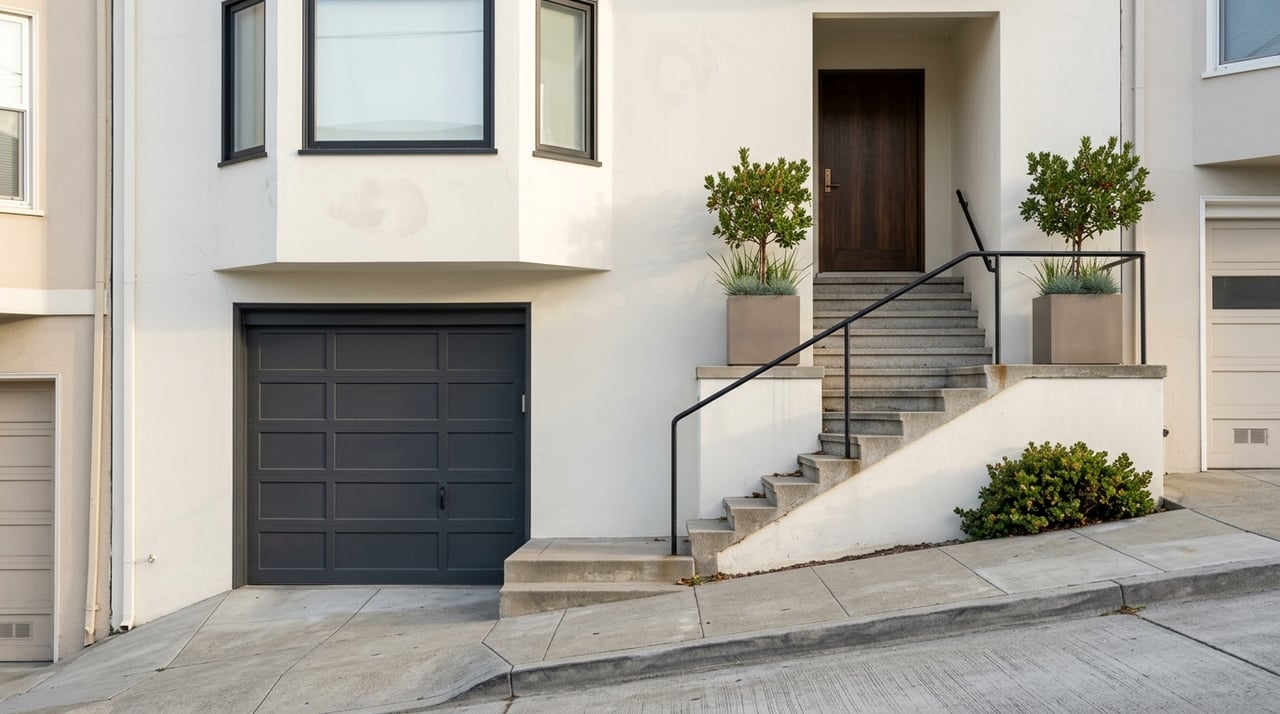
In Russian Hill, stairs are not a small inconvenience. They can be a daily quality-of-life issue that affects groceries, strollers, guests, package delivery, and how easy it feels to come and go.
San Francisco Planning’s General Plan emphasizes that steep slopes shape access in hill neighborhoods, and the Russian Hill/Macondray Lane district includes streets with grades reported at 23% to 26%. In practical terms, that means some blocks and entry sequences are much more demanding than they look in listing photos.
When you tour property here, it helps to count the full path, not just the interior stairs. Pay attention to:
A unit with a slightly smaller view but easier daily access may fit your life better than a more dramatic unit that feels like a workout every time you leave the house.
Russian Hill’s walkability is a big part of its appeal. Redfin currently describes the neighborhood as having a Walk Score of 98, which helps explain why many buyers accept tradeoffs around car storage and driving convenience.
Still, parking should not be treated as an afterthought. SFMTA places Russian Hill in Residential Parking Permit Area A, where residents can park beyond posted time limits within the permit area. Current annual permit costs are $224 for a passenger vehicle and $112 for a motorcycle, and most addresses may purchase up to four permits.
Those permits help, but they do not waive the 72-hour rule or color curb restrictions. SFMTA materials also indicate high parking occupancy in Area A during survey periods, which tells you demand is real.
For resale, this can matter a lot. A deeded parking space, usable garage, or simply a more convenient block can make a property easier to live in and easier to market later.
Russian Hill’s housing stock is part of its charm, but older buildings require a more careful review. In a neighborhood where many structures date back decades, you want to understand not just the unit, but the building behind it.
One major issue is seismic compliance. San Francisco’s mandatory soft-story ordinance applies to certain wood-frame buildings with five or more residential units, two or more stories, and original permits before January 1, 1978. The city also notes that retrofit work can disrupt parking.
If you are considering a unit in an older multi-unit building, ask whether the building has completed any required soft-story work and whether future assessments are expected. That can affect both your budget and how smooth ownership feels after closing.
Historic status matters too. DataSF notes that every parcel has a historic resource status, and some properties may be designated under Article 10 or 11 or be located within a historic district. In Russian Hill, that can influence what exterior work is possible, including changes to facades or windows.
Because Russian Hill has many older multi-unit buildings, you may come across TIC ownership. In San Francisco, TICs have long been used as an alternative to condo conversion rules.
The city notes that TICs typically sell at a discount because financing can be more complex. That means buyers should look closely at the TIC agreement, lender requirements, and long-term exit strategy.
This does not automatically make a TIC a bad choice. In some cases, it can be an opportunity to buy into a strong neighborhood at a lower price point. But it usually calls for more review and a clearer understanding of how resale may work down the road.
Russian Hill remains expensive by San Francisco standards, which is one reason buyers keep a close eye on long-term value. Current market pages in the research report place the neighborhood above the broader San Francisco median, with Russian Hill home values and sale prices around the high $1.6 million to $1.9 million range depending on the source and method.
That price position alone does not guarantee strong resale for every property. In Russian Hill, value tends to hold best when the home combines the neighborhood’s lifestyle appeal with practical livability.
The strongest resale factors often include:
In other words, buyers often pay for a combination of beauty and convenience. A stunning unit with too much day-to-day friction may face a narrower buyer pool later than a well-located home that is easier to live in.
If you want to buy thoughtfully in Russian Hill, focus on the details that affect both your lifestyle and future marketability. This neighborhood tends to reward buyers who look past the staging and ask practical questions early.
Use this checklist when comparing properties:
These questions can help you avoid surprises and choose a home that supports both your immediate goals and your long-term exit plan.
Russian Hill is one of those neighborhoods where two homes with similar square footage can feel completely different in person. A better floor level, easier stairs, more workable parking, or cleaner building records can make a major difference in value.
That is why buying here is not just about finding a beautiful unit. It is about weighing the tradeoffs with clear eyes and understanding which compromises are cosmetic and which ones can affect your daily life or future resale.
If you want help evaluating Russian Hill homes through both a lifestyle and value lens, Minna Real Estate can help you compare the details that matter most and make a confident move.
Stay up to date on the latest real estate trends.
Minna Millare combines San Francisco‑native insight with investment‑savvy strategies, remodeling expertise, and a client-centered approach. Let her guide you step-by-step through California’s dynamic market, ensuring smart decisions and personalized results.