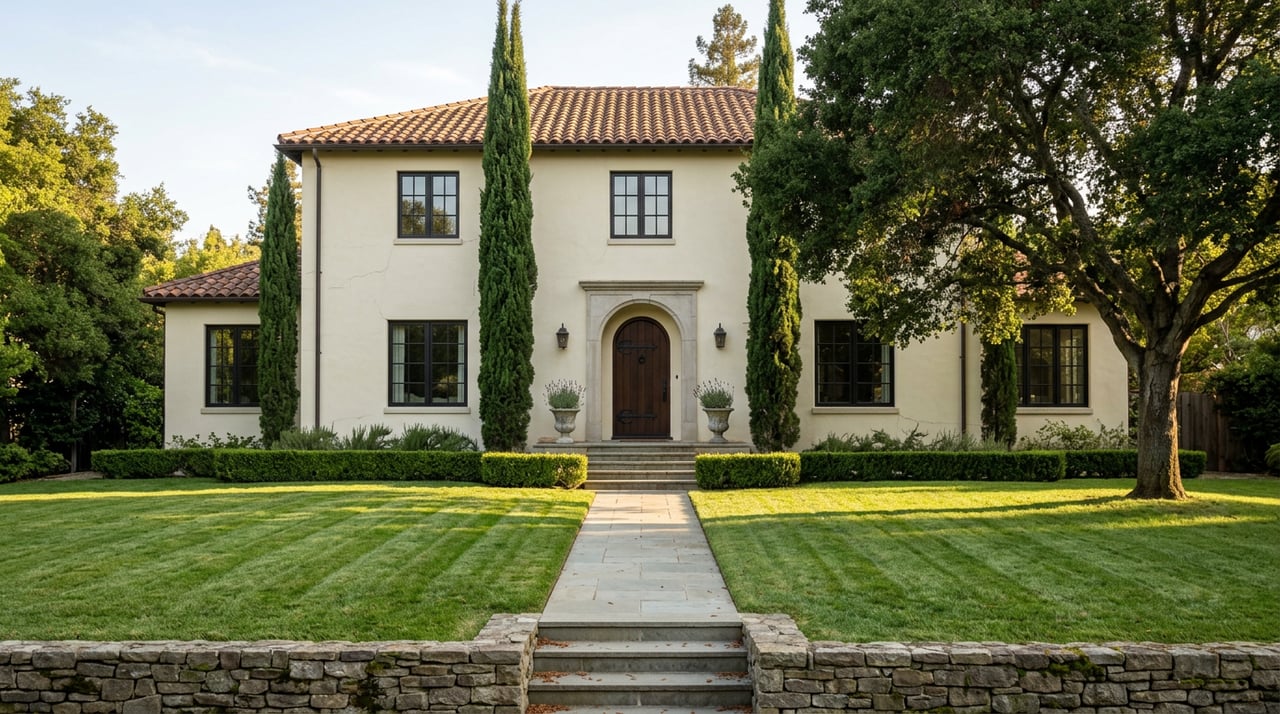
Understanding the St. Francis Wood Renovation Approval Process
September 3, 2026
September 3, 2026
A buyer who falls for St. Francis Wood usually falls for the same three things: the width of the lots, the curve of the streets, and a house that looks like nothing else in San Francisco because it isn't supposed to. What most buyers don't learn until they're already in contract is that changing so much as a window on that house means clearing two separate approval processes, run by two separate bodies, on two separate calendars that have no obligation to talk to each other.
That's the piece of this market that doesn't show up in a listing description or a portal search. It shows up the first time someone tries to repaint a stucco wall or swap a broken sash, and it's worth understanding before you write an offer, not after.
Every St. Francis Wood property comes with recorded covenants tied to the St. Francis Homes Association, the private nonprofit that has governed the tract since the Mason-McDuffie Company developed it starting in 1912. The association still maintains the neighborhood's fountains, entrance monuments, and planting strips, and it still reviews exterior changes through an architectural committee.
In practice, that review can mean waiting weeks for a hearing slot, sitting through an hours-long session alongside other homeowners' projects, and producing physical material samples for anything from a paint color to a replacement window. First-hand accounts from residents describe needing written sign-off from neighboring property owners before certain exterior work proceeds, and a strong preference for wood-sash windows from established manufacturers rather than vinyl or aluminum substitutes. None of this is written into the MLS listing. It's written into the CC&Rs, and most buyers don't ask to see those until after their offer is accepted.
Here's the part that surprises even people who did their homework on the homeowners association: the private review isn't the only one.
On June 30, 2022, St. Francis Wood was added to the National Register of Historic Places as a historic district, following a campaign by residents and support from the St. Francis Homes Association. That listing didn't just create a plaque. It layered a second, public review process on top of the private one, because San Francisco's Planning Department treats National Register districts as historic resources under the California Environmental Quality Act.
What that means for an actual renovation: window replacements already require a city building permit for every property in San Francisco, but in a designated historic district, any replacement visible from the street or a public right of way gets additional Planning Department review, and the department's own guidelines favor historically appropriate materials like wood sash over vinyl. Buildings over 50 years old, which describes most of the tract, can be treated as historical resources under CEQA the moment an owner applies for a permit to alter them, triggering an environmental evaluation before that permit can move forward.
There's one exception worth knowing, because it cuts the other way: paint color itself isn't regulated by the Planning Department, and a permit to repaint is only required if the building is unpainted masonry within a designated historic district. For most of St. Francis Wood's painted stucco and shingle homes, this is one of the few exterior changes that doesn't need a public sign-off, even though the private association's committee still wants a paint sample on the wall for neighbors to see first.
A window swap here can trigger a private hearing with the homeowners association and a public review with the city, on two different timelines, decided by two different groups of people.
The second thing that catches buyers off guard is how unstable the headline price numbers look, and it has nothing to do with the neighborhood losing value.
In March 2026, Redfin's own neighborhood data put the median sale price at $3.7 million, a drop of 35.8 percent from the same month a year earlier. Read as a market signal, that looks like a neighborhood in free fall. Read against the transaction count, it looks different: four homes sold in St. Francis Wood that month, up from just one the year before. A swing that size, in a pool that small, isn't a trend. It's what happens when one or two unusually priced houses close in the same 30-day window.
Zoom out further and the instability gets clearer. Real estate coverage from August 2025 put the neighborhood's median closer to $4 million, with an average price per square foot around $1,250. A twelve-month comparison of St. Francis Wood against neighboring Balboa Terrace, a comparable Olmsted-era enclave that shares developer history and street design, published in May 2026, found a roughly 20 percent per-square-foot pricing gap between the two, the kind of spread that only becomes visible when someone is tracking both closely, because neither trades often enough to generate a stable independent baseline.
| Snapshot | Reported median | Sample size / context |
|---|---|---|
| Mid-2025 (real estate press) | ~$4.0M, ~$1,250/sq ft | Single notable sale cited as representative |
| March 2026 (Redfin neighborhood data) | $3.7M, down 35.8% YoY | 4 sales, versus 1 sale in March 2025 |
The lesson isn't that one number is right and the other is wrong. It's that a neighborhood this size, with sales this infrequent, doesn't produce a "median" in the way a denser district does. Anyone pricing a listing or an offer here off a single portal snapshot is pricing off noise.
If you're looking at St. Francis Wood as a buyer who wants to update, expand, or restore a home rather than leave it untouched, a few things are worth doing before you're locked into a contract.
Does every renovation in St. Francis Wood trigger the historic district review? Interior work generally doesn't. The public review applies when a project touches exterior, street-visible elements, such as windows, siding, or additions, on a building old enough or designated enough to count as a historical resource.
Is the homeowners association review the same for every house? The architectural committee reviews exterior projects across the tract, but the specifics, like whether neighbor sign-off is required, tend to depend on the scope of the work rather than being identical for every application.
Are HOA dues fixed? Reporting from 2025 put annual dues somewhere between about $2,000 and just over $5,000, scaled to house size, though any prospective buyer should confirm the current figure directly with the association rather than relying on a secondhand estimate.
If you're weighing a purchase in St. Francis Wood, or you already own here and are trying to figure out what a renovation will actually cost in time as well as money, Minna Real Estate can walk through the specific approval path for your property before you're committed to a timeline. Get My Free Home Valuation and we'll start with what your house is actually worth in a market this thin, not what the last portal snapshot says.
Stay up to date on the latest real estate trends.
Minna Millare combines San Francisco‑native insight with investment‑savvy strategies, remodeling expertise, and a client-centered approach. Let her guide you step-by-step through California’s dynamic market, ensuring smart decisions and personalized results.