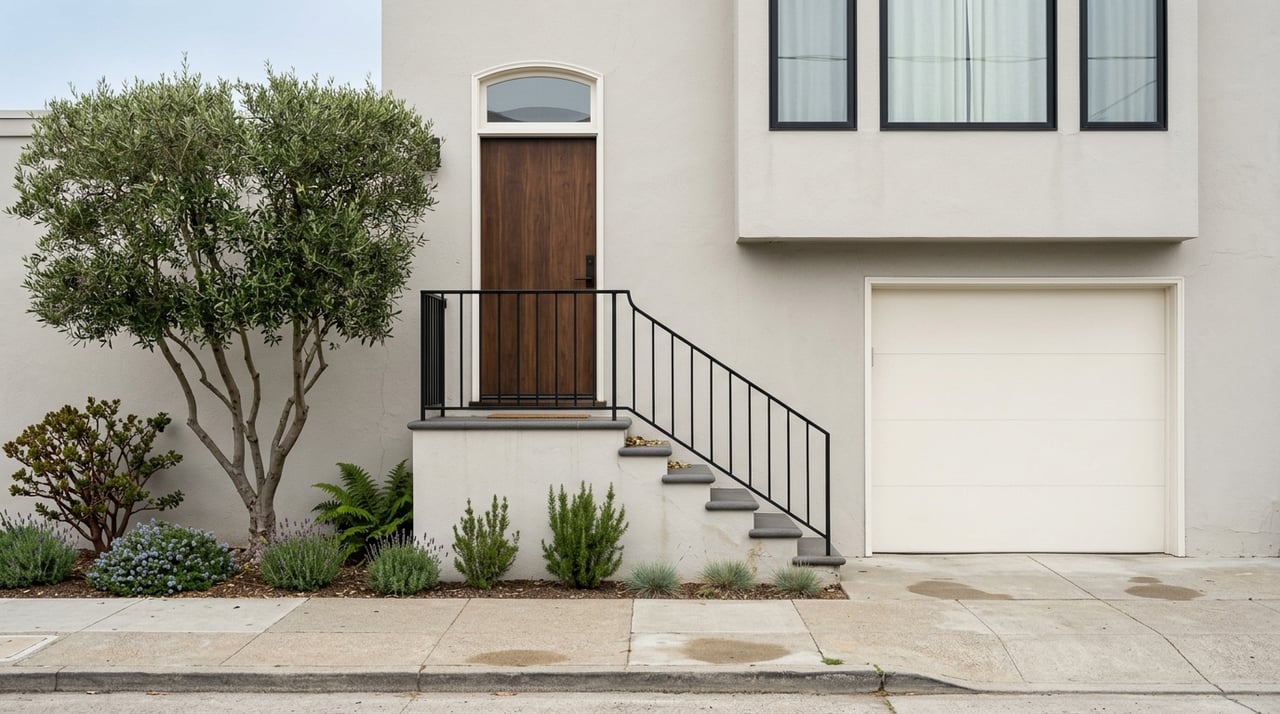
Glen Park vs Noe Valley: Compare Price and Lifestyle
May 14, 2026
May 14, 2026
Trying to choose between Glen Park and Noe Valley? You are not alone. These neighboring San Francisco communities can both be appealing, but they offer meaningfully different tradeoffs in price, housing mix, transit, and day-to-day feel. If you are deciding where your budget and lifestyle line up best, this guide will help you compare the data and picture what living in each area may actually feel like. Let’s dive in.
Glen Park and Noe Valley sit close to each other, but they do not function the same way. Based on San Francisco Planning’s 2025 housing inventory, current BART and SFMTA service information, and March 2026 market snapshots, Glen Park stands out as the more transit-centered village, while Noe Valley centers more around the 24th Street retail corridor.
For many buyers, the choice comes down to a simple question. Do you want stronger regional rail access and quick proximity to open space, or do you want a larger neighborhood shopping street with a denser, more active daily retail pattern?
Price is often the first filter, and the gap here is significant. As of March 2026, Redfin reports a median sale price of $1,843,000 in Glen Park and $2,275,000 in Noe Valley.
That means Noe Valley’s median sale price is about $432,000 higher, or roughly 23.4% above Glen Park on this measure. If you are trying to stay in a specific budget range while still buying in a well-known San Francisco neighborhood, Glen Park may offer a lower entry point.
Price per square foot narrows the gap, but it does not erase it. Redfin shows Glen Park at about $1.2K per square foot and Noe Valley at about $1.3K per square foot, which still points to a premium in Noe Valley.
The pace of the market also differs. Redfin shows homes in Glen Park selling after 34 days on market, compared with 11 days in Noe Valley.
Noe Valley is labeled most competitive, while Glen Park is labeled very competitive. In practical terms, that suggests buyers in Noe Valley may need to be prepared for faster decision-making and stronger competition.
The two neighborhoods also differ in the types of homes you are more likely to find. San Francisco Planning’s 2025 Housing Inventory shows Glen Park with 4,239 housing units and Noe Valley with 11,710 units, so Noe Valley has about 2.8 times as many units overall.
Glen Park has a larger share of single-family housing. Planning data shows the neighborhood is about 47% single-family and 23% 2 to 4 unit buildings.
Noe Valley leans more heavily toward smaller multifamily housing. It is about 27% single-family and 44% 2 to 4 unit buildings, which points to more flats and rowhouse-style housing in the mix.
If you are looking for a detached-home feel or want to focus more heavily on single-family options, Glen Park may fit your search more naturally. If you are open to or specifically seeking flats, 2 to 4 unit buildings, or a denser neighborhood fabric, Noe Valley may offer more of that inventory.
This matters not just for how a block looks and feels, but for how your home search unfolds. A neighborhood with a different housing mix can shape what is realistically available at your price point.
Glen Park is often described through its compact village identity. San Francisco Planning highlights walkability, transit, parks, and neighborhood-serving retail as central to what makes the area distinctive.
SF.gov’s Glen Park guide points to key amenities such as Glen Park BART, the J Church, Canyon Market, Glen Canyon Park Recreation Center, the Glen Park Greenway, and hiking trails in Glen Canyon Park. That combination gives Glen Park a close-to-nature feel without losing city convenience.
Noe Valley presents differently. Its commercial core is formally organized as the 24th Street–Noe Valley Neighborhood Commercial District, a small-scale mixed-use district along 24th Street between Chattanooga and Diamond.
SF.gov highlights businesses along 24th Street including Chloe’s Café, Lehr’s German Specialties, Mitchell’s Ice Cream, Noe Valley Bakery, Haystack Pizza, Firefly Restaurant, and The Dubliner. The planning code describes the district as daytime-oriented and multi-purpose, with retail and personal services at street level and residential uses above.
Glen Park may be the better fit if your ideal day includes easy access to trails, parks, and a neighborhood center that feels compact and connected. The area’s identity is closely tied to the ability to walk to stores, transit, parks, and community facilities.
For some buyers, that creates a strong balance. You get a neighborhood-serving core, plus a sense of separation from busier retail corridors.
Noe Valley may appeal more if you want a broader run of shops and services woven into everyday life. The 24th Street corridor gives the neighborhood a stronger retail spine and a more continuous commercial presence.
That can be a real advantage if your lifestyle priorities include grabbing coffee, dining nearby, or handling more errands along a single neighborhood shopping street. It tends to read as a denser, more convenience-rich environment.
Transit is one of the clearest dividing lines between these neighborhoods. Glen Park has the stronger regional rail advantage.
According to BART, Glen Park Station is at Diamond and Bosworth and is served by four BART lines. BART also notes that the station has 55 parking spaces.
SFMTA’s Glen Park neighborhood page lists the J Church and several bus lines, including 14 Mission, 14R Mission Rapid, 23 Monterey, 24 Divisadero, 35 Eureka, 36 Teresita, 44 O’Shaughnessy, 49 Van Ness/Mission, and 52 Excelsior. That gives Glen Park a broad local transit network on top of BART access.
Noe Valley is better described as Muni-centered. SFMTA’s Noe Valley neighborhood page lists the J Church, K Ingleside, L Owl, M Ocean View, T Third Street Bus, 12 Folsom/Pacific, 14 Mission, 14R Mission Rapid, 24 Divisadero, 27 Bryant, 33 Ashbury/18th Street, 35 Eureka, 36 Teresita, 37 Corbett, 48 Quintara/24th Street, 49 Van Ness/Mission, and 52 Excelsior.
SFMTA’s J Church page shows service running weekdays from 5 a.m. to midnight and weekends from 6 a.m. to midnight, with posted schedule bands of 15-minute weekday daytime headways and 20-minute weekend headways. For buyers who rely on city transit rather than regional rail, that can be a meaningful point in Noe Valley’s favor.
If your routine depends on direct regional rail access, Glen Park likely has the edge. If you want a neighborhood with broad surface transit coverage and a strong Muni connection, Noe Valley offers that in a more Muni-centered framework.
This is one of those decisions where your weekly routine matters more than general neighborhood reputation. The right answer depends on whether BART access or a broader web of local transit service better fits how you move through the city.
Both neighborhoods can work for a range of buyers, but the data points to different strengths.
A lower price does not automatically mean a better fit, and a higher price does not automatically mean better value for you. The real question is how closely the neighborhood matches your daily habits, commute, and housing goals.
For example, if direct BART access and quick open-space access matter to you, Glen Park’s advantages may justify prioritizing it. If your top priority is a stronger neighborhood retail corridor and a housing mix with more small multifamily options, Noe Valley may be worth the premium.
This is also where local guidance matters. In San Francisco, small differences in block pattern, transit access, and housing stock can have a big impact on what feels right in person and what makes sense for your budget.
If you are weighing Glen Park against Noe Valley, a neighborhood-by-neighborhood strategy can save time and sharpen your search. Minna Real Estate can help you compare inventory, understand tradeoffs, and identify where your budget may go further while keeping your lifestyle goals in focus.
Stay up to date on the latest real estate trends.


Minna Millare combines San Francisco‑native insight with investment‑savvy strategies, remodeling expertise, and a client-centered approach. Let her guide you step-by-step through California’s dynamic market, ensuring smart decisions and personalized results.