Should You Own A Pied-A-Terre In San Francisco's FiDi?
July 9, 2026
July 9, 2026
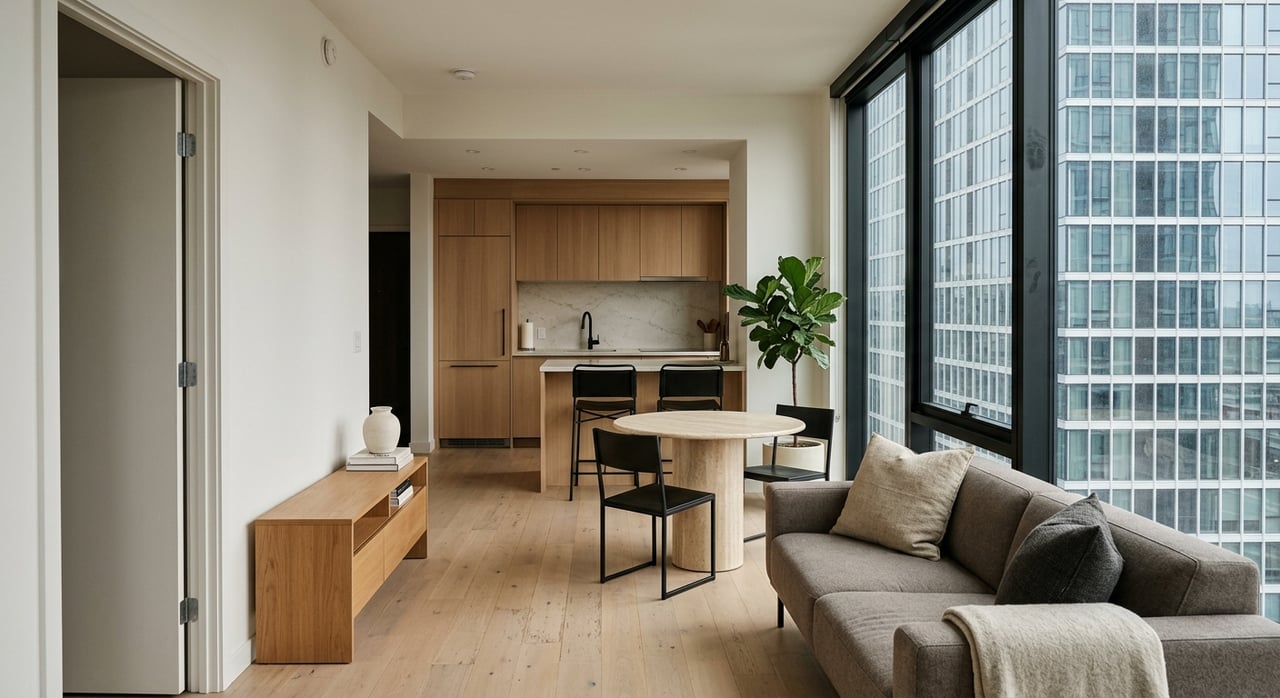
Is a Financial District pied-à-terre a smart move, or a lifestyle mismatch? If you want a low-maintenance San Francisco base near downtown offices, major transit, and the waterfront, FiDi can make a lot of sense. But if you picture a neighborhood with steady residential energy day and night, the fit may be less obvious. This guide will help you weigh the tradeoffs, compare FiDi with nearby alternatives, and focus on the building details that matter most before you buy. Let’s dive in.
San Francisco’s Financial District sits in the city’s office core, with banks, office buildings, and major employment concentrated around Montgomery, California, and lower Market. The city’s Downtown Plan says downtown office employment exceeds 220,000 workers, and housing in the area includes apartments, condominiums, and residential hotels. For a buyer who wants a compact home base close to work and transit, that setup is easy to understand.
Downtown is also one of the densest and most walkable downtowns in the United States, with strong regional transit access. If you want a car-light or car-free second home, FiDi supports that lifestyle well. You can use the home as a practical landing spot for weekday stays, business travel, or regular trips into the city.
In plain terms, FiDi tends to work best when your priority is convenience. You are buying access to the office core, downtown transit, the Embarcadero, and visitor-oriented amenities. You are usually not buying into a classic all-hours residential neighborhood feel.
A FiDi pied-à-terre is often a strong match if you want:
If that sounds like your real goal, FiDi deserves a serious look. It can deliver a very functional version of San Francisco living.
The same planning documents that make FiDi appealing also point to its biggest tradeoff. The Downtown Plan notes that the area lacks life at night and on weekends. That matters if you want your second home to feel like a full-time neighborhood, not just a well-located urban base.
This does not mean FiDi is a bad place to buy. It means you should be honest about how you plan to use the property. If your ideal routine includes active street life, neighborhood-serving activity throughout the week, and a stronger residential rhythm, you may feel more at home elsewhere.
FiDi is also a poor fit if you expect the unit to help offset costs through short-term rentals. San Francisco’s short-term rental rules were written to allow only primary residents to rent their home short-term, and the city said secondary or vacation homes would not be granted permission. Even when city rules allow something, an HOA may still be stricter.
You may want to think twice if you are looking for:
If you are deciding between downtown-adjacent neighborhoods, the right answer depends on what you want your pied-à-terre to feel like. FiDi, SoMa, and Rincon Hill each serve a different purpose.
Choose FiDi if your top priority is being close to downtown work and transit. It offers a more compact, business-district lifestyle. For some buyers, that is exactly the point.
San Francisco Planning describes Central SoMa as a lively and diverse area with residents, work activity, and visitors at all hours of the day. The plan also says nightlife is essential to a complete neighborhood there. If you want a more active mixed-use setting with more evening and weekend energy, SoMa will usually feel stronger than FiDi.
The city is also revising downtown land-use policy to increase housing capacity in SoMa and East Cut. That suggests SoMa is expected to absorb more residential life over time. If your pied-à-terre should feel plugged into a more 24/7 environment, SoMa may deserve priority.
Rincon Hill is planned as a mixed-use residential neighborhood adjacent to downtown. The area plan says it should become primarily residential, with more housing-oriented streets and building patterns. That points to a more housing-first identity than FiDi.
At the same time, the plan says Rincon Hill currently lacks open space, community facilities, and neighborhood commercial uses that would let people walk to meet daily needs. So while it may feel more residential, it may not feel as layered or active as SoMa.
Here is a simple way to think about it:
| Neighborhood | Best For | Tradeoff |
|---|---|---|
| FiDi | Office access, transit, lock-and-leave convenience | Less evening and weekend residential energy |
| SoMa | Mixed-use lifestyle, more all-hours activity | More nightlife-oriented environment |
| Rincon Hill | More residential setting near downtown | Fewer daily-needs amenities in the area |
With a pied-à-terre, building rules can make or break the ownership experience. In California, buying a condo in a common interest development automatically makes you a member of the homeowners association. That means the HOA is not a minor detail. It is a real governance layer that affects how you use the home.
The California Attorney General explains that CC&Rs govern HOA rights, responsibilities, and restrictions, while bylaws and board rules govern how the association is run. The Davis-Stirling Act covers major HOA issues like elections, finances, maintenance responsibilities, and dispute resolution. For a second-home buyer, that means you need to understand the building as carefully as the unit itself.
Before you move forward, request and review:
These documents can reveal restrictions that matter a lot for occasional-use owners. Pay close attention to rules around rentals, guest stays, pets, noise, storage, move-in procedures, and alterations.
A building can look perfect on paper and still be a poor fit for your actual use. That is especially true if you will not be in the unit full-time.
Watch for these issues:
If you are away often, even routine HOA notices or building logistics can become more burdensome. A well-run building with clear rules and healthy reserves can make ownership much easier.
For a FiDi pied-à-terre, your hold period matters. San Francisco is actively working on a long-term downtown transition that includes adaptive reuse policies, financing tools, and incentives to support more housing. But the city’s 2026 annual report says no commercial-to-residential conversion projects had opted in yet, no projects had been financed yet, and no completions are expected until fiscal year 2028-29 at the earliest.
That does not weaken the long-term case for downtown living. It does mean the downtown housing story is still unfolding. If part of your investment logic depends on a more residential, more active downtown in the near future, you should recognize that the timeline may be longer than hoped.
A shorter holding period may be riskier in FiDi because part of the value story depends on downtown’s continued recovery and evolution. If you are buying for personal convenience and planning to keep the property for a while, that may be easier to justify. If you need a quick resale window, the fit becomes more sensitive.
This is where strategy matters. You want a unit that works for you now and still appeals to future buyers later.
Not every FiDi condo will age equally well in the market. In a neighborhood that is still strongly shaped by office and commercial demand, buyers tend to notice whether a unit feels like a true urban residence or a niche office-adjacent product.
Focus on features that tend to hold up best:
These details matter because they affect both daily livability and future marketability. In a compact pied-à-terre, practical design often carries more weight than sheer size.
Yes, if you want a low-maintenance downtown base and you value transit, convenience, and proximity to the office core. FiDi can be a very smart choice for professionals who use San Francisco in a weekday-heavy, travel-heavy, or office-adjacent way.
Probably not, if you want a stronger everyday residential rhythm or you are counting on short-term rental income to support the purchase. In that case, SoMa or Rincon Hill may line up better with your goals, depending on whether you want more mixed-use energy or a more residential feel.
The key is not whether FiDi is good or bad. It is whether FiDi matches the way you will actually live. If you want help comparing buildings, reviewing condo tradeoffs, or identifying a unit with stronger long-term upside, Minna Real Estate can help you evaluate the details with a practical, neighborhood-specific lens.
Stay up to date on the latest real estate trends.
Minna Millare combines San Francisco‑native insight with investment‑savvy strategies, remodeling expertise, and a client-centered approach. Let her guide you step-by-step through California’s dynamic market, ensuring smart decisions and personalized results.