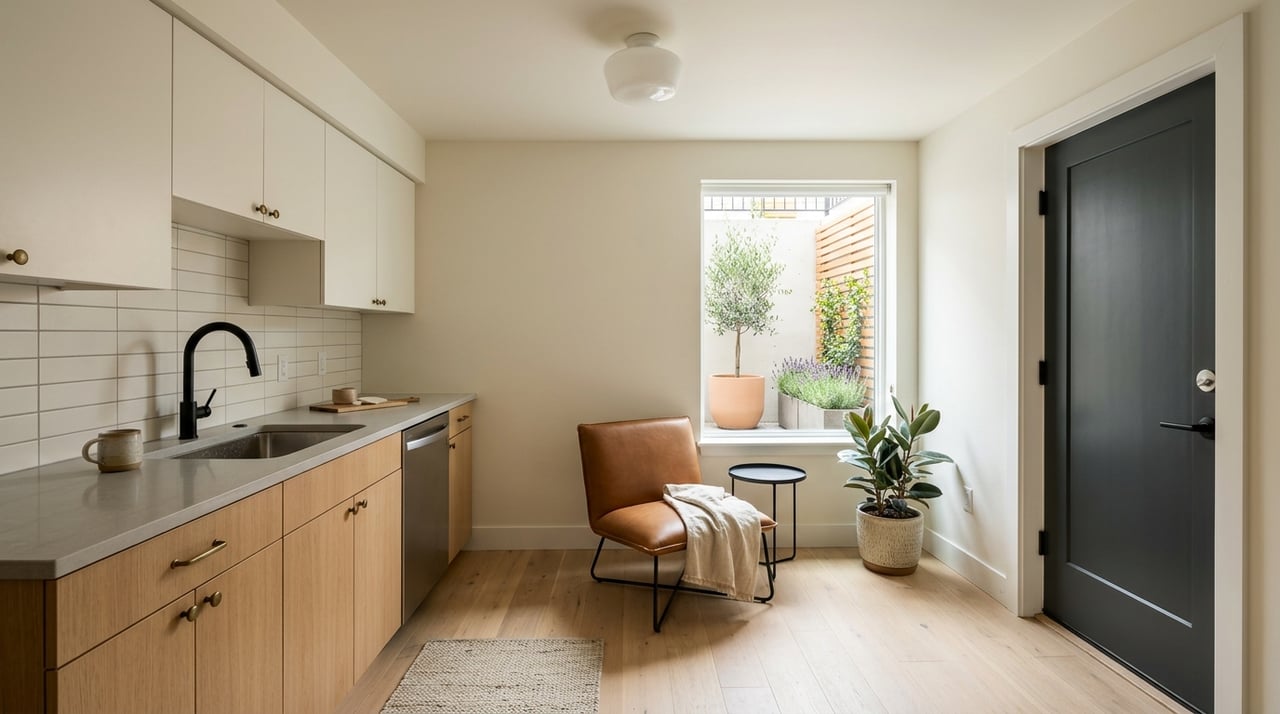
House Hacking In San Francisco's Mission District
May 21, 2026
May 21, 2026
Trying to offset a San Francisco mortgage with rental income? In the Mission District, that idea can be realistic, but it is rarely simple. If you are thinking about house hacking here, you need more than a rough budget and a spare room. You need to understand how property type, permit history, rental rules, and financing all work together. This guide will walk you through the most practical paths, the biggest local tradeoffs, and the due diligence that matters most. Let’s dive in.
The Mission District has several traits that make house hacking worth a serious look. It is dense, transit-rich, and mixed-use, with nearly 60,000 residents and about 17,000 housing units. San Francisco Planning also points to the neighborhood’s two BART stations, more than ten Muni bus lines, and a long-standing mix of shops, restaurants, and cultural destinations.
For you as a buyer, that combination can support demand for well-located housing. The area’s older and varied housing stock can also create opportunities for renting a room, buying a legal second unit, or exploring an ADU project. At the same time, many Mission properties date back to the 1870s, 1880s, and post-1906 rebuilding periods, so age and historic context can add complexity.
That is the core Mission tradeoff. You may find strong location value and adaptable layouts, but you also need to be prepared for more review, more paperwork, and more attention to legal details than in a simpler housing market.
House hacking means you live in the property while using part of it to generate income. In the Mission, that usually falls into one of four buckets.
This is often the most straightforward option for an owner-occupant. California Courts says a true lodger setup applies when you rent one room to one person in a home that remains your residence, while you keep access to every room in the home.
That last part matters. If you rent to more than one person, move out, or give up access in a way that changes the arrangement, it may no longer qualify as a lodger setup. For buyers who want modest income without taking on a full multi-unit or ADU project, this can be the cleanest path.
A legal secondary unit can create a more defined income stream, but San Francisco rules make status a major issue. The city says many residential units built on or before June 13, 1979 have both rent control and eviction protection, while some others have eviction protection only, and state law may still apply even where local rent control does not.
In practical terms, you cannot assume a listing’s extra bedroom count tells the full story. Permit history, occupancy history, and whether the second space is legally recognized can affect rental rules, financing, and resale value.
An ADU can be a smart long-term play if the property truly supports it. San Francisco requires a building permit for an ADU, and the city says many single-family and multi-family homes may have space for one.
But the economics need a close look. The city notes that ADU projects can cost at least $125,000 in materials and labor before professional fees and city fees. Timelines can stretch further if seismic work, variances, multiple ADUs, or historic review are involved.
If you are thinking about Airbnb-style income, San Francisco keeps this tightly regulated. The host must be the permanent resident, must have lived there at least 60 days before applying, and must intend to live there at least 275 nights each year.
Hosted rentals have no annual night limit, but un-hosted rentals are generally capped at 90 nights per calendar year. The city also requires registration, a short-term rental certificate, quarterly reporting, tax compliance, and other steps. In multi-unit buildings, you may only register and operate the unit where you actually live.
In the Mission, house hacking is less about the concept and more about the legal setup. Two homes can look similar on paper and behave very differently under city rules.
San Francisco rental law is highly status-dependent. A property’s build date, unit count, and rental history can shape whether local rent control applies, whether eviction protections apply, or both.
This matters when you run your numbers. The future flexibility you think you are buying may not match the legal reality, especially if a unit is already occupied or was created without clear approvals.
San Francisco’s Costa-Hawkins guidance warns that a single-family home with an illegal in-law unit can be treated as a two-unit building and may lose an exemption if both units are not rented together as one tenancy. That means an unpermitted setup can affect more than rent potential.
It can also affect how the property is classified and how risk shows up later. Before you count on income from a lower-level unit or backyard space, confirm what is actually legal.
If the property is tenant-occupied and you want to use the local ADU program, the city requires notices to be posted and mailed, plus a declaration filed with the Rent Board. The city also says you cannot remove or reduce tenant housing services like parking or storage without a legal basis.
For buyers, that means a tenant-occupied building may be much different from a vacant one, even if the floor plan looks ideal. The timeline, carrying cost, and project feasibility can all change.
House hacking often looks good on a spreadsheet because you can offset your monthly payment with rent. That can be true, but lenders still care about the exact property type and documentation.
Freddie Mac says owner-occupied 2- to 4-unit primary residences are eligible property types, and rental income from the other units can be added to total income to help calculate debt-to-income ratios. Fannie Mae also requires eligible rents on these properties to be documented using specific worksheets and support.
The takeaway is simple. Projected rent may help you qualify, but only if the building, occupancy, and paperwork fit the lender’s guidelines.
Fannie Mae says ADUs can be financed through standard purchase or refinance loans, HomeStyle Renovation, or construction-to-permanent financing. For a one-unit principal residence with an existing ADU, rental income may be used in certain cases, but ADU income is capped at 30% of total qualifying income under Fannie Mae rules.
There is another key wrinkle. ADUs are not eligible with a 2- to 4-unit dwelling under those rules, so you should not assume every property with an extra unit fits the same financing bucket.
For 2026, conforming loan limits in San Francisco County are $1,249,125 for a one-unit property, $1,599,375 for two units, $1,933,200 for three units, and $2,402,625 for four units. In the Mission, where pricing can be high, many house-hack purchases can sit close to those limits or cross into jumbo territory.
That does not make the deal impossible. It just means your financing strategy should be built early, before you get attached to a property that only works under one narrow loan structure.
Not every extra room or downstairs space is useful for house hacking. The layout has to work for both legal use and lender acceptance.
For an ADU, Fannie Mae says the unit should include living, sleeping, cooking, and bathroom facilities, plus independent access and an expectation of privacy from the main home. Those features help define whether the space functions as a distinct unit.
If a setup lacks those basics, it may still be useful to you personally, but it may not support the income plan you had in mind. This is one reason floor plans and permit records need to be reviewed together.
Fannie Mae also points to separate utility meters, a unique postal address, and legal rental status when determining classification. That means the physical layout is only part of the story.
A Mission property can seem perfect for house hacking based on square footage alone, yet still run into issues at appraisal or underwriting. Your strategy should match what the property can legally and financially support.
The Mission’s older housing stock can be a real advantage, but it also raises the stakes on due diligence. If you are shopping for a house hack here, focus on the details below early.
In the Mission, charm and value-add potential often come together. So do hidden constraints. A good opportunity is usually the one where the legal path is as strong as the floor plan.
House hacking in the Mission can make sense if you want to lower your housing cost, stay owner-occupied, and are comfortable trading some privacy for income. It can also work well if you are open to a longer-term value-add plan, such as buying a property with a legal second unit or adding an ADU where the numbers and approvals support it.
It may be less appealing if you want a simple purchase, fast renovations, or total flexibility on future rental use. In this neighborhood, success usually comes from patient underwriting, careful property selection, and realistic expectations.
At Minna Real Estate, we look closely at layout, legal status, renovation potential, and resale impact so you can make a decision that works both now and later. If you are exploring a Mission District house hack, connect with Minna Real Estate for strategic guidance on finding the right property and evaluating its upside.
Stay up to date on the latest real estate trends.
Minna Millare combines San Francisco‑native insight with investment‑savvy strategies, remodeling expertise, and a client-centered approach. Let her guide you step-by-step through California’s dynamic market, ensuring smart decisions and personalized results.